The score
A ladder, not a rating out of a hundred
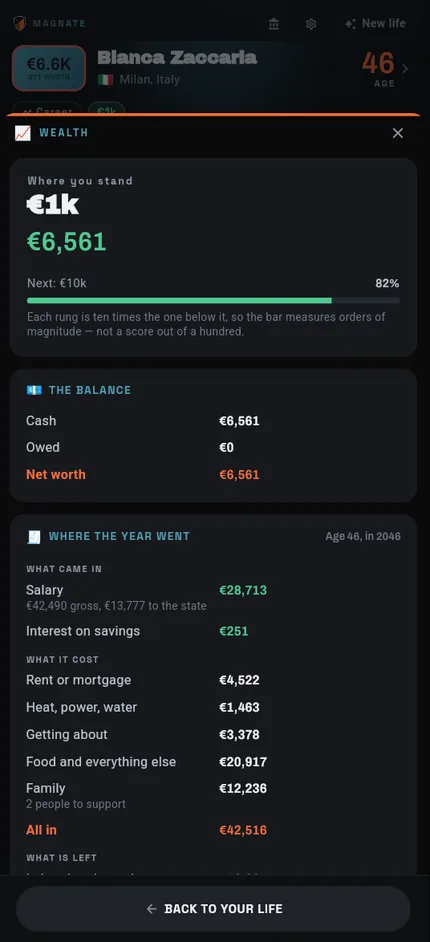
Progress is net worth on a logarithmic ladder: each rung is ten times the one below, from €1k to €1T, with «in debt» as its own honest state. Skills stay 0–100, but they are inputs — the ladder is the score, and it measures orders of magnitude, not effort.
€1k€100k€1M
€100M€1B€1T
Ability
Seventeen skills, four families, caps set at birth
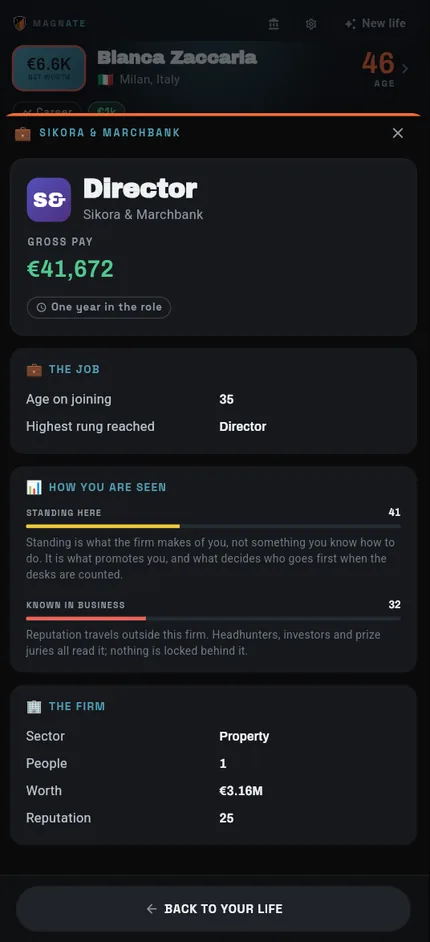
Strategy, finance, people, execution. Each skill grows toward a cap your talent rolled before you could walk — school moves them, work moves them, neglect moves them backwards. What you're paid follows what you can actually do.
Money
Gross, tax, net, interest
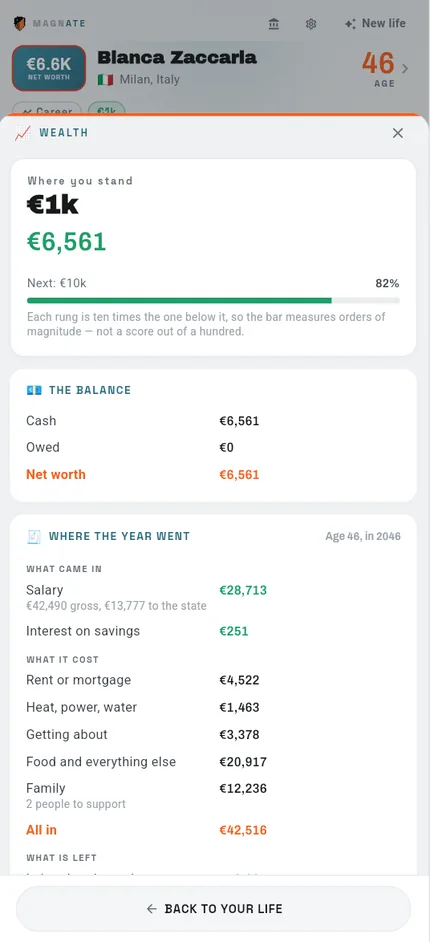
Salaries are plausible, the state's cut is visible on every payslip, living costs arrive whether you earned or not, and debt compounds with the patience of a thing that always wins. Bankruptcy is a state, not a game over.
Health
Twenty-two ways to lose a year
Ailments arrive, linger and — sometimes — leave. They cost momentum, the treatment costs money, stress feeds them, and a bad decade of health can do to a fortune what no market ever did.
Family
Everyone around you is a whole person
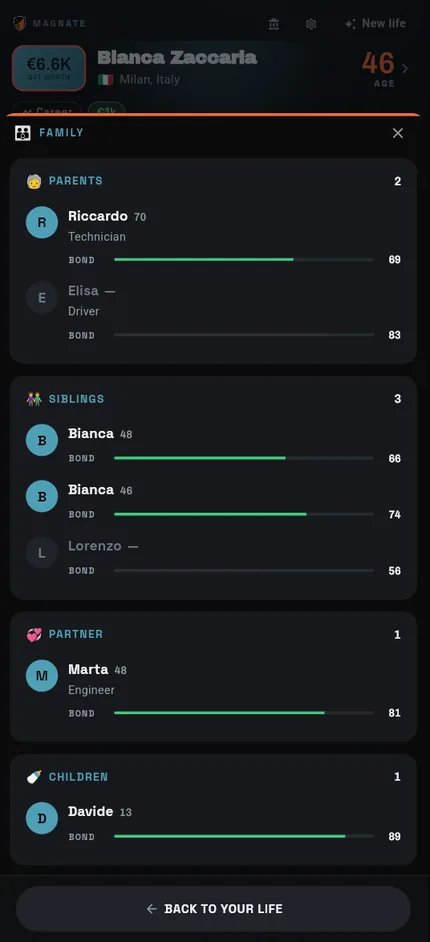
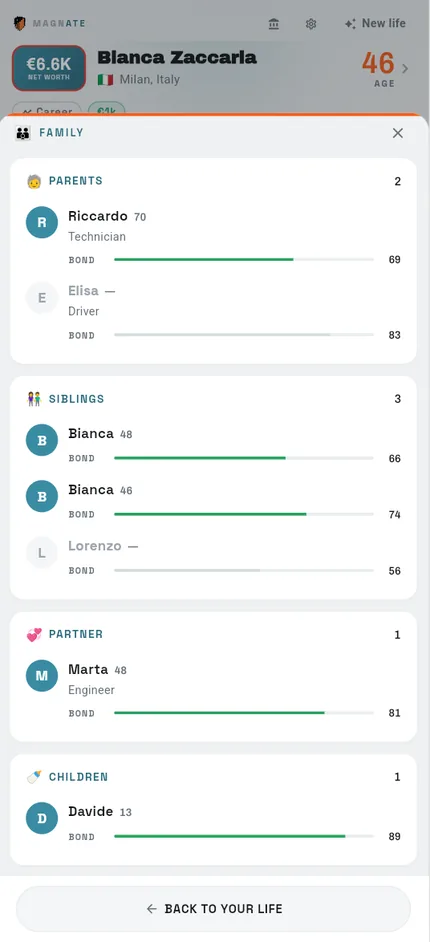
Parents with jobs and bonds that fray or hold, siblings, a partner, children the simulation tracks from birth — because one of them will be you. Every relationship has a number, and the numbers move.
The company
Eight sectors, funded round by round — to a unicorn, or under

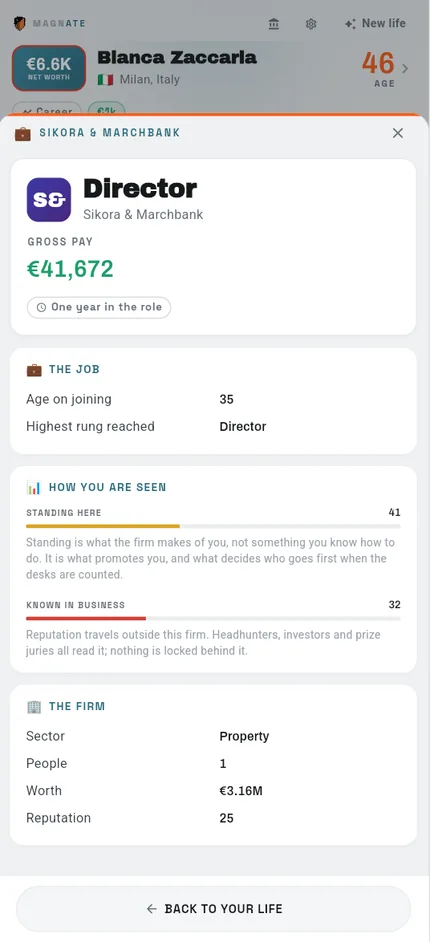
Found something in manufacturing, marketplaces, property, finance and four more. Raise capital from bootstrap to seed to growth, and every round is a trade: runway for ownership. The engine owns every number — payroll, loan rates, tax — and 2,391 written event cards give the years their words without ever touching the maths. The top rungs of the ladder are built for founders, because a salary alone was never going to reach €1T.
 Magnate